Marlboro Red vs Camel Yellow vs Dunhill Red: What's Actually Different
By Cigarro |
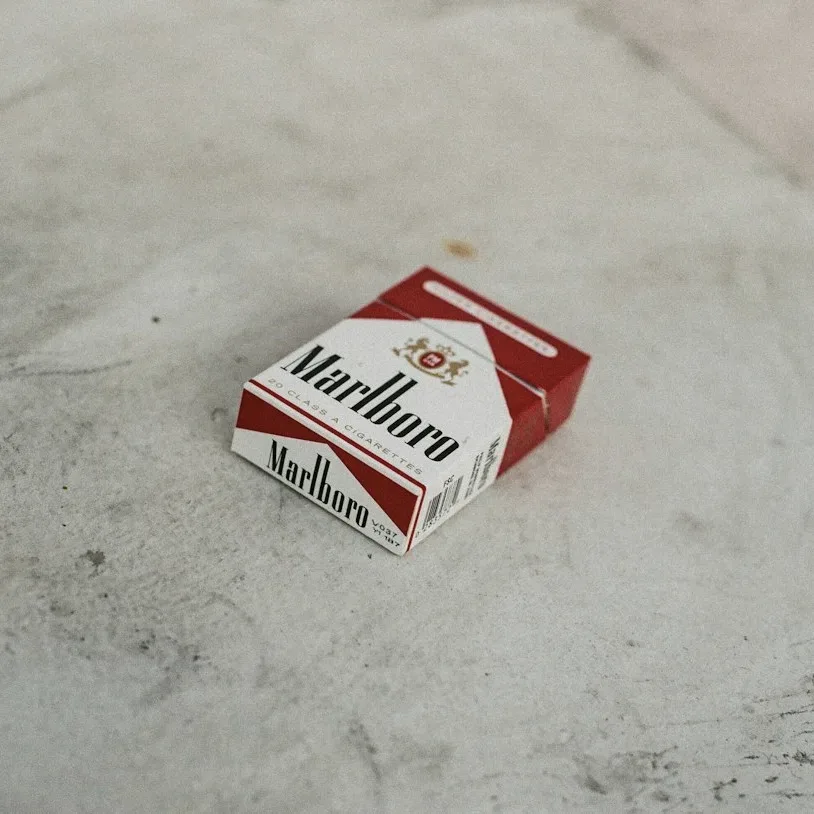
Three king size cigarettes, all 10 mg tar, all claiming to be the original. How Marlboro Red, Camel Yellow and Dunhill Red actually differ on the draw.
These three king size cigarettes sit on almost every duty-free shelf in the world. Tar 10 mg across the board, all imported, all 84 mm. But they do not taste alike, and the measurable differences explain why.
Marlboro Red - the benchmark
Made by Philip Morris, Marlboro Red is the reference point. Virginia-Burley-Oriental blend, tar 10 mg, nicotine 0.8 mg, firm acetate filter, even burn. It is the most "American" of the three: bold, earthy, and a clear throat hit on every draw. Rs.300 per packet, Rs.2,550 per carton.
Camel Yellow - the smoother cousin
Now made by JTI, Camel Yellow has the same 10 mg tar and 0.8 mg nicotine as Marlboro Red, but the Turkish leaf in the blend gives it a rounder, slightly more aromatic smoke. Same packet and carton pricing.
Dunhill Red 10MG - the British take
BAT's Dunhill Red 10MG pushes the nicotine to 1.0 mg while keeping tar at 10 mg. The result is a fuller-bodied smoke with stronger delivery per puff. Where Marlboro and Camel feel American in profile, Dunhill Red feels British: rounder, deeper, and a touch heavier on the finish. Rs.600 per packet, Rs.5,100 per carton.
Reading the three side by side
Same tar, different delivery: nicotine runs 0.8 / 0.8 / 1.0 mg across Marlboro, Camel and Dunhill, and the blend families diverge from there - American burley-forward, Turkish-aromatic, British deep. Price runs Rs.300 / Rs.300 / Rs.600 per packet, so Dunhill costs double for its extra 0.2 mg and the premium positioning. None of the three is milder in any way that matters for health; the numbers only describe smoke yield.
Formats and availability
All three come as packets of 20 and cartons of 10 packets (200 sticks). The Marlboro, Camel and Dunhill brand pages list every variant in each line - full-flavour, light and menthol - for side-by-side comparison.
Further reading
Zoom in on either rivalry: Camel Yellow vs Blue and Dunhill Red vs Silver. For what those 10 mg / 0.8-1.0 mg numbers mean across brands, read our tar and nicotine strength guide.